
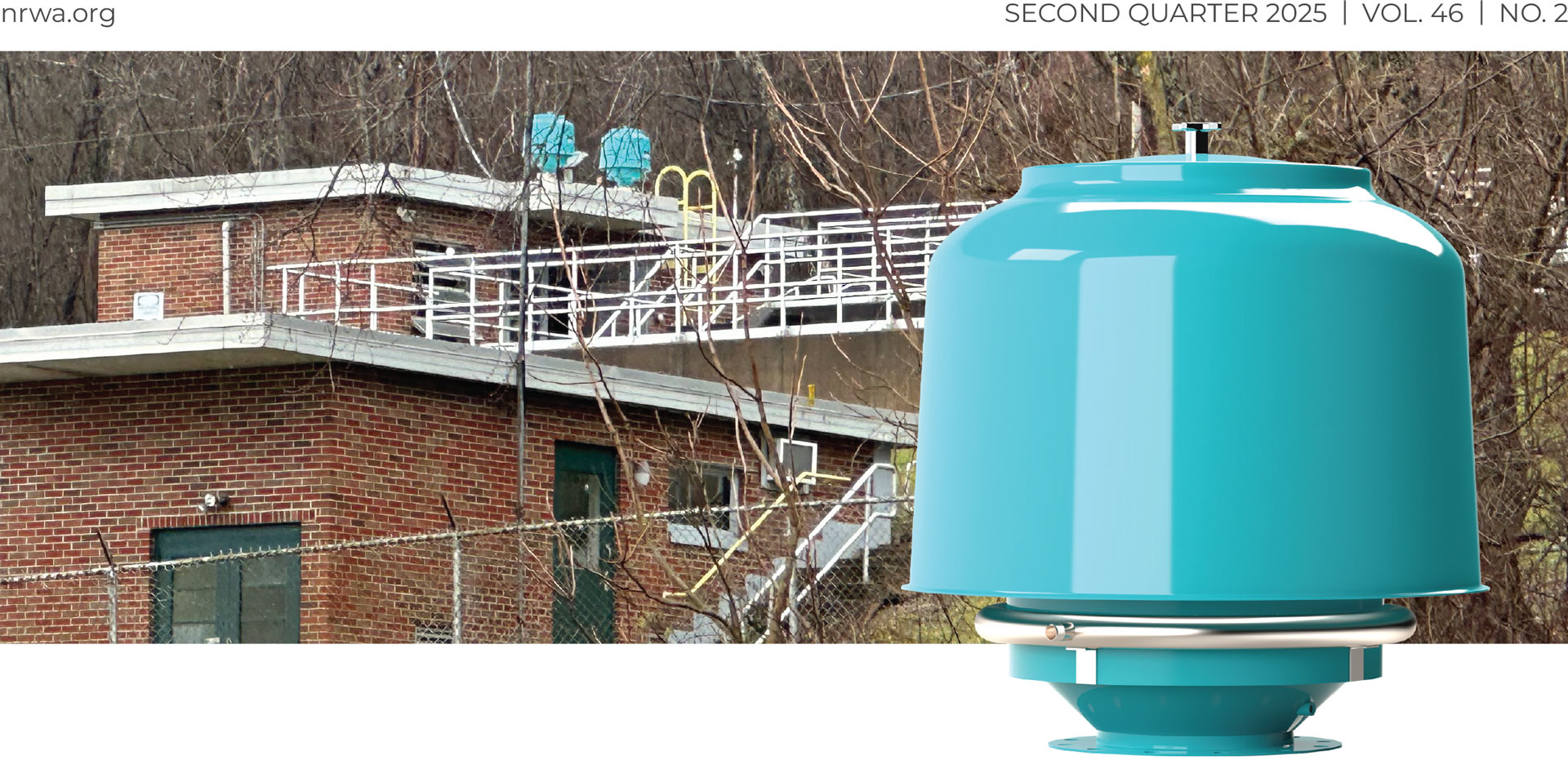
In late 2023, as part of the constant battle to keep expenses under control, Tim Louis, administrator for the Village of McConnelsville, Ohio, made the decision to upgrade and optimize their two multi-stage blowers with Tri-Vent®® Intake Filter Silencers. As administrator of a rural community in southeastern Ohio with a population of fewer than 2,000, Louis is held accountable for every dollar spent. However, after extensive research and consultation, he was confident that optimizing his blower intake filter silencers would yield a reduction in power consumption that would justify the investment.
Wastewater treatment is a uniquely expensive process, and the largest recurring cost, particularly for smaller communities, is power. Pumping, UV treatments, aeration, and other processes consume electricity, and as utility rates increase, the budget challenges intensify. Equipment upgrades such as new blowers, compressors, and pumps promise reduced energy consumption and operating costs, but the purchase price of
these major upgrades is often beyond the reach of smaller municipalities.
Blower intake filters are largely overlooked throughout the wastewater treatment industry. Wastewater treatment plant staff do not think about them until it’s time to service or there’s a problem. Engineers see filters as simple blower accessories. Even equipment manufacturers disregard intake filters as little more than a required package component. However, in addition to providing critical protection for equipment and diffusers, an optimized filter silencer improves blower performance and reduces energy consumption.
For McConnelsville, that reduction was more than 71,000 kWh in one year.
The Village of McConnelsville provides sewage treatment for both McConnelsville and the nearby Village of Malta, which shares their water treatment services, so Louis had to justify his upgrade plan to both town councils, the mayor of McConnelsville, and a joint board for the two villages consisting of three council members from each community.
Spending money on new blower filters might not seem like an effective approach to saving money, and the idea of spending $5,000 on two filters was not appealing to either community. “My initial reservations were beyond extreme on this one,” Louis admitted.
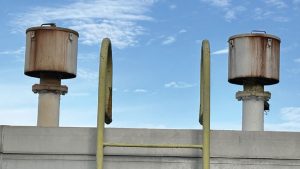
Prior to McConnelsville’s filtration upgrade, they were using outdated canister-type filters (pictured).
The aging filters were no longer capable of mechanically sealing, meaning they were constantly bypassing particulate into the blowers and, by extension, the pipes, valves, and diffusers. Furthermore, the level of corrosion meant the filter canisters had to be opened with with a hammer — and the canister lids weighed nearly 40 pounds. This chore had to be performed twice a year.
After studying the optimized design of Tri-Vent®® Filter Silencers, manufactured by Endustra, Louis understood the engineering principles at work. “My expectations were mostly based on my knowledge of automobile engine performance,” he said. When an engine intake is optimized to reduce restriction, more horsepower is available to move the car. Knowing that these upgrades can result increased performance and fuel economy, Louis used the comparison of high-end after-market auto parts to justify the filter upgrade. His reasoning: if an optimized automotive filter saved fuel in his car, then an optimized blower intake filter silencer would save electricity in his wastewater treatment plant.
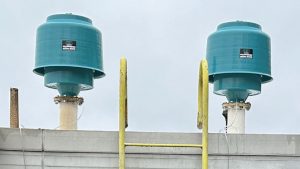
Louis immediately observed an increase in blower output, and he began to gradually reduce the motor speed a little more each day, until settling on a 12% reduction. By the end of the month, the blowers were tuned to perform with the newly lowered filter restrictions.
The power savings Louis has predicted were correct. “In February, I made it a point to report to my council that the cost savings from January alone were alone over $600,” he noted.
In the first month of operation, McConnelsville had reduced its power consumption by 8,000 kWh (see Electrical Usage Comparison).
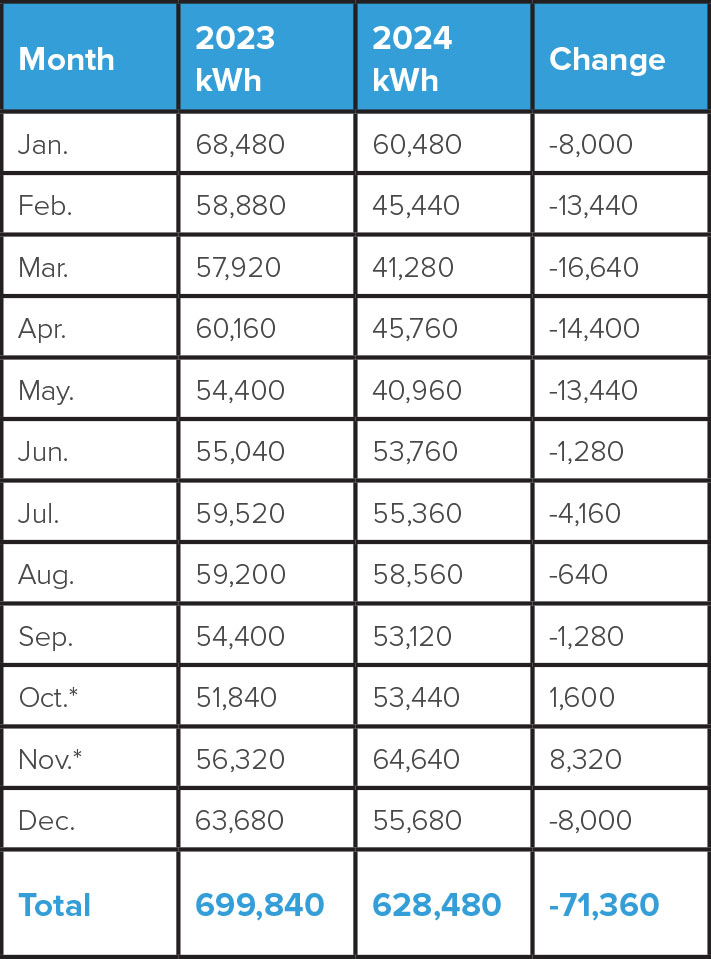
Electrical Usage Comparison 2023-2024
By May 2024, the Village had completely recovered the cost of its intake filter upgrade. “[For an upgrade] to pay for itself in the five months is an out-of-this-world investment,” said Louis. As well as tracking its electrical expenditure, McConnelsville also tracked filter restriction after the upgrade. The Legacy filters, despite being incapable of sealing, still required two changes per year. By the end of calendar year 2024, both Tri-Vent®® Series P09 intake filter silencers showed only 1.75” WG of restriction. It will likely take two years or longer before the filters reach the final recommended restriction of 6-7” WG.
The new filters are zero-bypass, meaning all the air going into the machine is filtered, and changing filter elements will no require tools — or hammers! Tri-Vent®® Series filters are lightweight and easy to maintain, which will be appreciated by plant personnel.
The first five months of energy savings significantly reduced plant-wide operating costs. Then, in June 2024, the Village of McConnelsville saw a 30% increase in the cost of power per kWh.
The filter change had come just in time. Even with this substantial increase in costs, McConnelsville’s 71,000+ kWh reduction for the year essentially eliminated the financial penalty of the rate increase: the Village spent nearly the same amount of money in 2024 as in 2023, which suggests that the optimized intake filter silencer reduced plant power consumption by nearly 30%. Aside from unseasonably cold weather during October and November, which increased power demand for those months, McConnelsville saw consistent reduction in energy consumption.
Treating wastewater is a necessary but expensive process. Wastewater treatment plants will always need to pump and aerate, and electricity costs will always increase. Between 2023 and 2024, the Village of McConnelsville learned firsthand of both the rising costs of operations and the benefits of optimizing blower intake filtration. With the kWh reductions, McConnelsville realized they’ll be able to combat the rising costs of operations in the future.